Fish Passage Barrier Assessment and Inventory Project
Overview
Sound Salmon Solutions is assessing and inventorying potentional fish passage barriers in Snohomish and north King Counties. This work is being done in collaboration with other agencies around the Snohomish and Stillaguamish watersheds, in hopes of creating a full picture of how our valuable salmon populations are able to migrate in Washington State.
Our goals:
Collect important data on culverts, bridges, and dams on private land
Build strong working relationships in the community
Identify barriers in need of repair, removal, or replacement to benefit both landowners and anadromous fish populations
We are a non-regulatory and non-enforcement organization. We assess potential barriers and collect basic hydrologic data to help inform drainage priorities and aid restoration efforts. Our field assessments typically take 1 - 2 hours and are at no cost or obligation to the landowner.
What is a fish passage barrier?
There are five species of anadromous salmon (salmon that spend portions of their life cycle in both fresh and salt waters) in Washington - Chinook, Coho, Steelhead, Chum, and Pink. These populations return from the ocean to spawn in our local freshwater watersheds. Our regional development and increasing human population have cut off some of these populations from their natal, historic spawning streams.
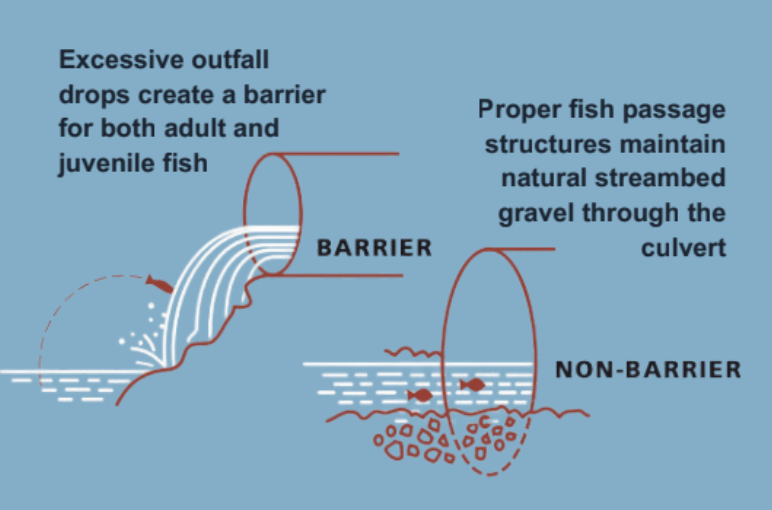
Most fish passage barriers are culverts: pipes constructed under roads in order to let water pass through. Many of these were not constructed with fish populations in mind, and there are over 40,000 in Washington!
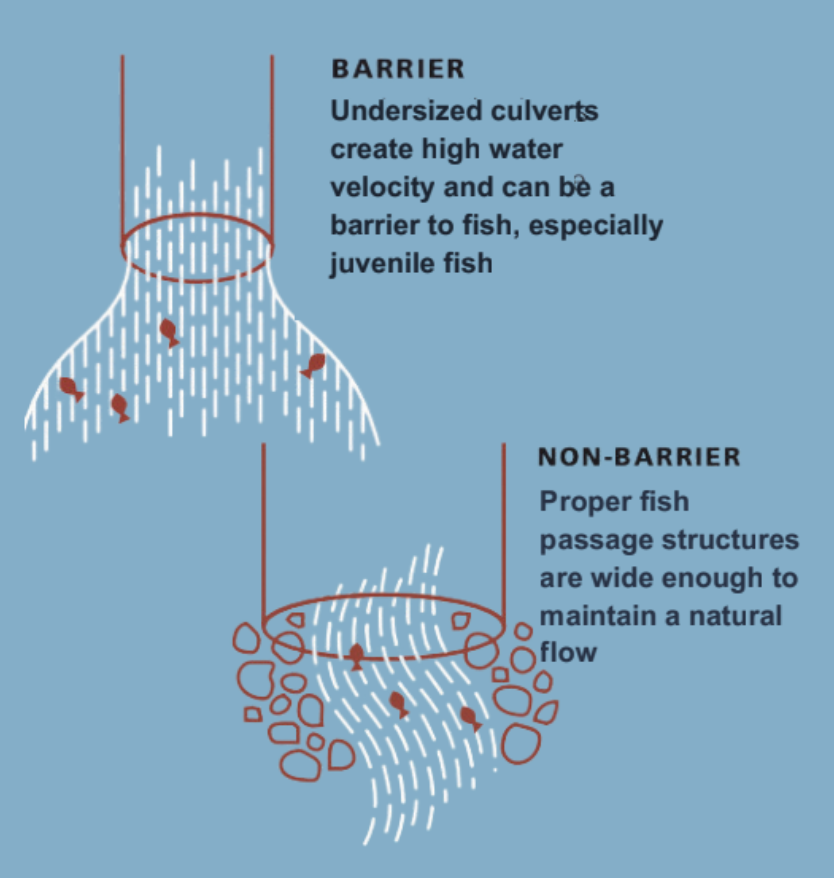
Stream crossings that are improperly sized or poorly positioned can cause property damage from flooding as well as prevent fish passage.
Diagrams adapted from Family Forest Fish Passage Program
What does an assessment look like?
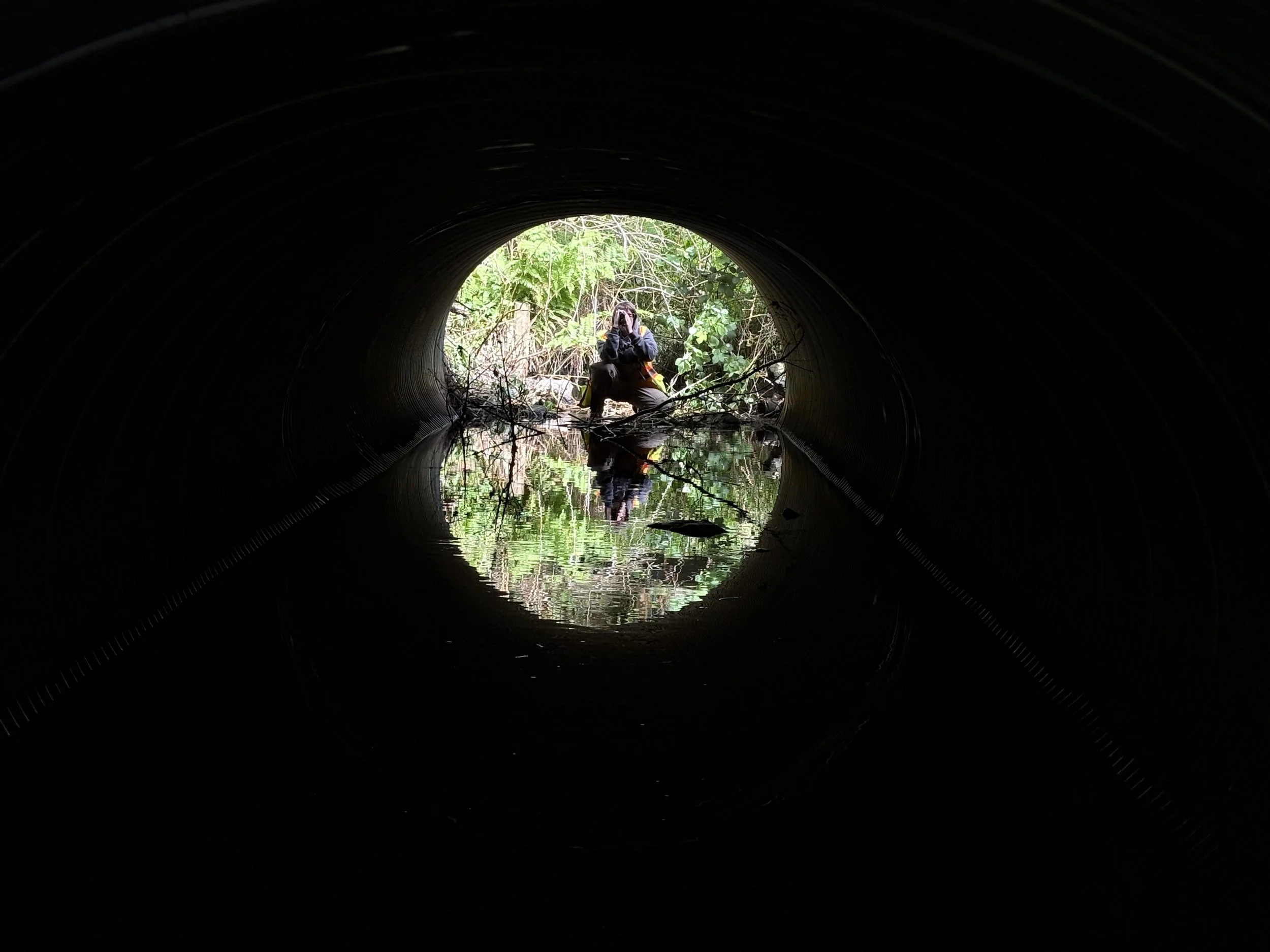
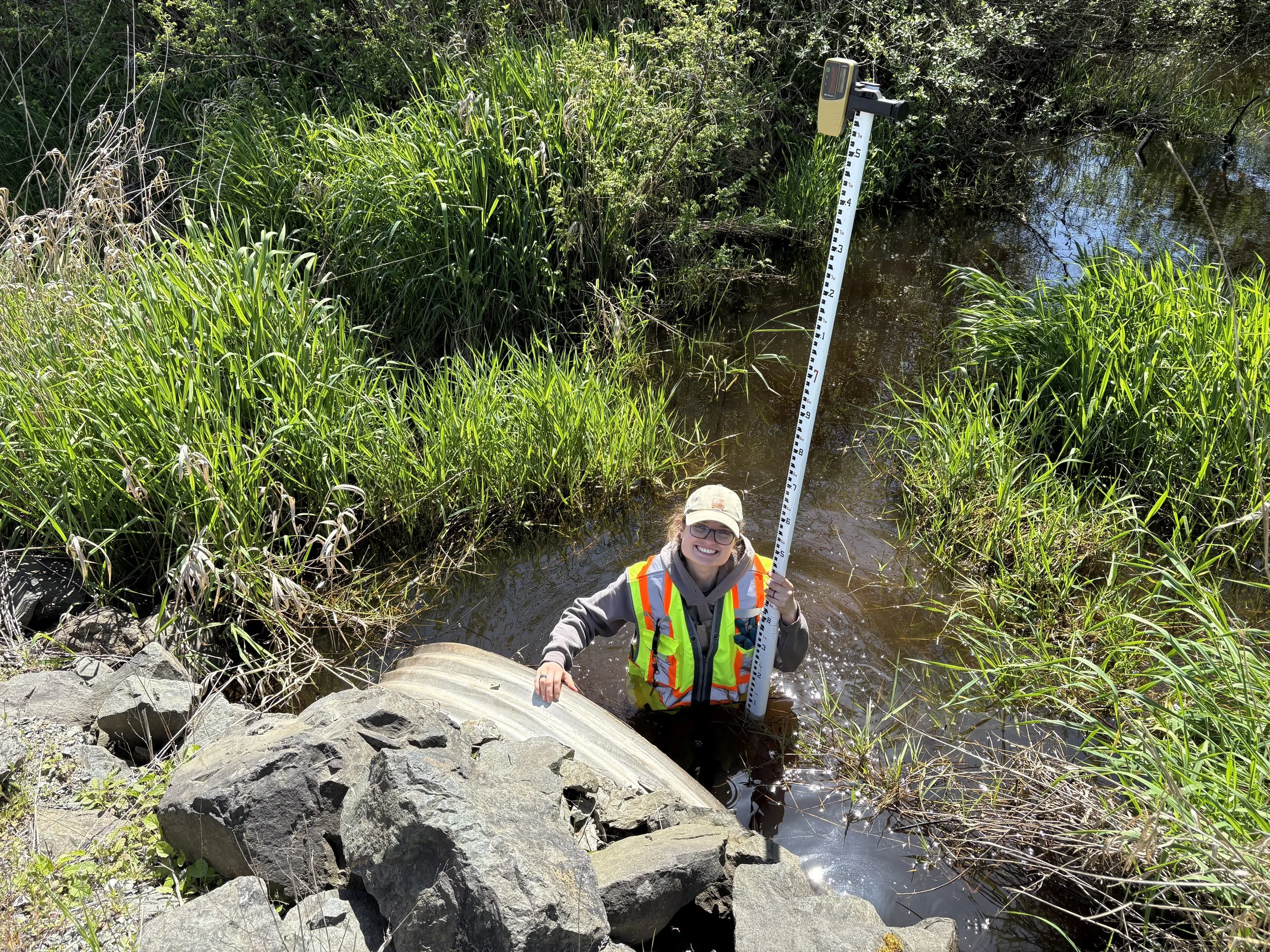
A team of two techs will spend 1-2 hours on an average barrier assessment. Assessments are minimally invasive; our equipment does not break ground, and we only clear as much vegetation as needed for a person to access the culvert. We measure things like water depth, amount of sediment, and height and width of the culvert on both the upstream and downstream ends. Sometimes we may even measure the stream channel to get an accurate model of the water flowing through it. Once our team has collected the assessment data, we can calculate whether your culvert is a barrier or non-barrier.
What happens if you find a barrier on my property?
Sound Salmon Solutions is a non-regulatory and non-enforcement organization. We use the data we collect to help inform decisions on barrier repair, replacement, and removal projects, not to start pointing any fingers! If we identify a barrier that would represent a valuable replacement project (for example, if replacing one culvert would open up several miles of salmon spawning habitat), we may approach the landowner with the interest of partnering on a completely voluntary basis. SSS would seek funding so the project, like the assessment, could be done at no cost to the landowner. Furthermore, agreeing to let us do an assessment will not obligate you to agree to any further action on your culvert.
Do you have a stream on your property?
Any stream greater than 2 feet wide or with a historical salmon run is of interest to us!
If you are a landowner interested in partnering with us, please fill out the form below.
Contact our team
425-230-2945 Ext. 1
fishpassage@soundsalmonsolutions.org
Thank you to our sponsors on this project, National Oceanic and Atmospheric Administration (NOAA) and the Tulalip Tribes. Our work would not be possible without their funding and partnership!